Description
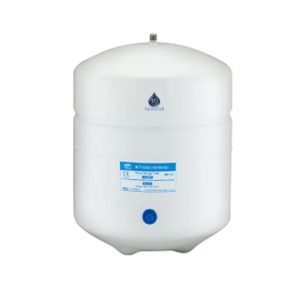
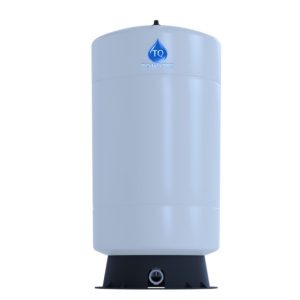
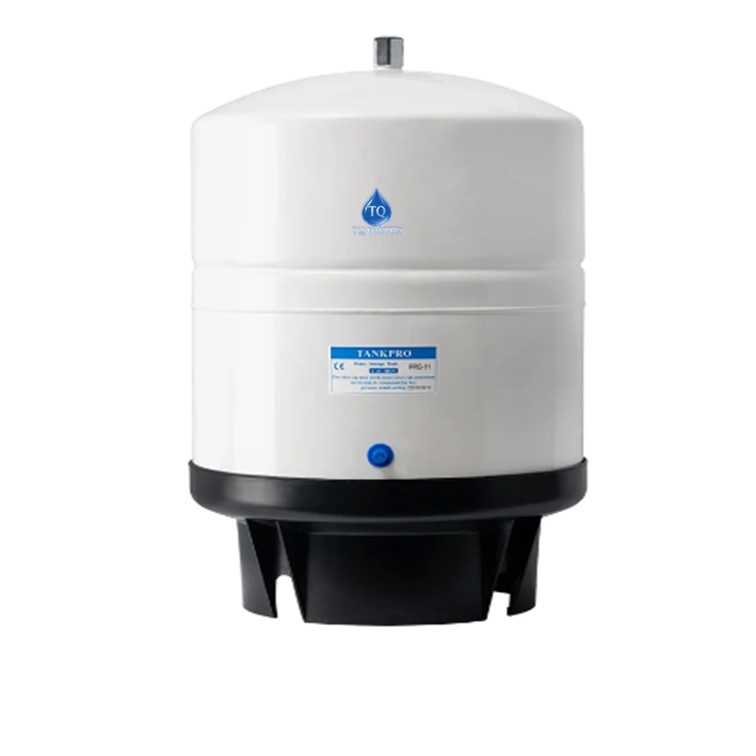
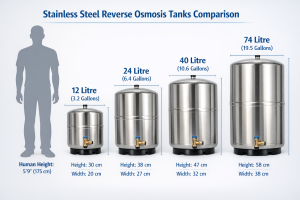
Stainless Steel RO Storage Tank – 40 Litre
ID: 1162 | SKU: TQA.TANK.SS40
-
Total Volume: 40 Litres (approx. 10.5 Gallons)
-
Actual Water Capacity: ~28 Litres (at standard 40-60 PSI)
-
Connection: 1″ NPT Male Thread (Requires reducer for RO tubing)
-
Dimensions: 580mm (Height) x 300mm (Diameter)
-
Weight: ~9.8 kg
-
Best For: Restaurants, busy cafes, and light commercial laboratory use.
-
Empty Tank Air Pre-Charge Requirements
Tank Size Recommended Air Pressure (Empty) Maximum Working Pressure 12 Litre 0.45 bar (approx. 7 PSI) 6.9 bar (100 PSI) 24 Litre 0.45 bar (approx. 7 PSI) 6.9 bar (100 PSI) 40 Litre 0.50 bar (approx. 8 PSI) 6.9 bar (100 PSI) 74 Litre 0.55 bar (approx. 8 PSI) 6.9 bar (100 PSI) -
Isolate & Empty: Turn off the water supply to the RO system and open the RO faucet until the water stops flowing completely. This ensures there is no back-pressure from the water.
-
Locate the Valve: On the side or bottom of the stainless steel tank, there is a small plastic cap. Unscrew it to reveal a standard Schrader Valve (exactly like a car or bicycle tire valve).
-
Check Pressure: Use a low-pressure digital gauge. If it reads $0$, the bladder has lost its charge.
-
Pump Slowly: Use a manual bicycle pump or a small compressor.
-
Warning: Only add a few pumps at a time. Because the air chamber is small, the pressure rises very quickly.
-
-
Target: Aim for 0.45 bar. If you go over, simply bleed a little air out using the center pin of the valve.
-
Best For: Standard under-sink residential RO systems for a family of 2–4.