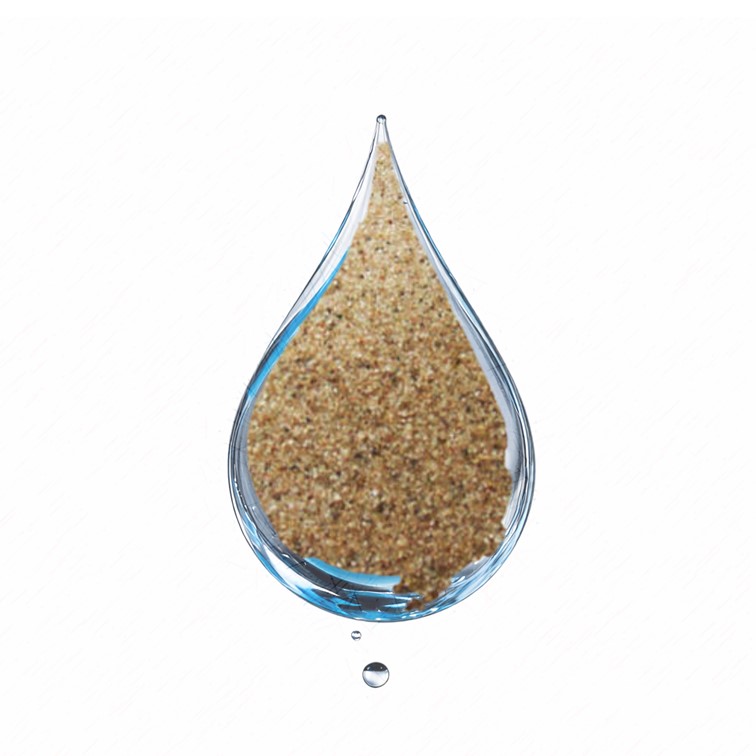
Fine Filter Sand (0.6mm – 1.2mm).
Description
specialized, precisely graded silica sand used as a key medium to remove suspended solids and other impurities from water. It’s not just any sand you might find on a beach or in a sandbox; it has specific characteristics that make it effective for filtration:
- Composition: Primarily composed of silica (silicon dioxide, ), it is hard, durable, and chemically inert, meaning it won’t react with the water or the contaminants it’s designed to remove.
- Grain Size and Uniformity: Filter sand is carefully sieved and classified into specific grain sizes. This uniformity is crucial for creating a filter bed with consistent pore spaces, which is essential for efficient filtration and effective backwashing. Different layers within a filter (as described previously, e.g., coarse, intermediate, fine) will use different sand grain sizes.
- Shape: The grains are typically angular or sub-angular, rather than perfectly rounded. This allows for better interlocking of particles, creating a more stable filter bed and enhancing the surface area for filtration processes like adsorption and biological activity.
- Cleanliness: Filter sand is rigorously washed and free from organic matter, clay, and other impurities that could interfere with filtration or lead to clogging.
How it functions in water filtration:
When water passes through a bed of filter sand, several mechanisms come into play to purify it:
- Straining (Mechanical Sieving): Larger suspended particles in the water are physically trapped and retained in the pore spaces between the sand grains. This is the most straightforward mechanism.
- Sedimentation: As water flows slowly through the filter bed, gravity causes heavier suspended particles to settle onto the surface of the sand grains or within the pore spaces.
- Adsorption: The surface of the sand grains can attract and hold onto smaller particles, dissolved organic matter, and some chemical contaminants through various physical and chemical forces.
- Biological Action (Especially in Slow Sand Filters): Over time, a gelatinous layer of microorganisms (a “biofilm” or “schmutzdecke”) forms on the surface of the fine sand grains. This living layer plays a critical role in biodegrading organic matter and consuming pathogens, significantly enhancing water quality.
In essence, filter sand acts as a porous barrier that physically strains out larger impurities, provides a vast surface area for smaller particles to settle or adhere to, and, in certain applications, supports a biological community that actively purifies the water.


Reviews
There are no reviews yet.