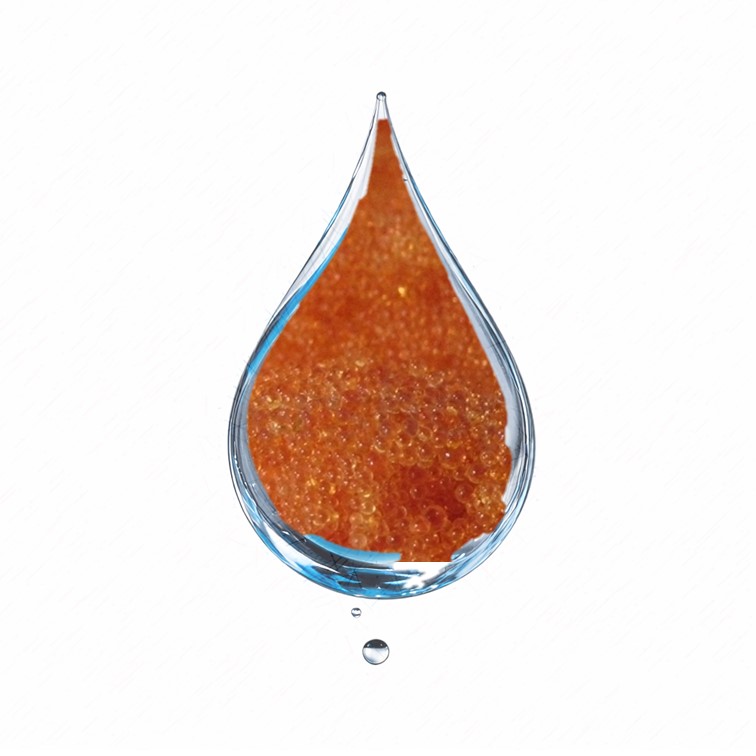
(Cation) Softening Resin 25 litre per Bag
Description
💧 Cation Softening Resin: Overview and Technical Guide
Cation exchange resins are the core media used in water softeners, designed to remove hardness ions such as calcium (Ca²⁺) and magnesium (Mg²⁺) from water. These ions are responsible for scale buildup, soap inefficiency, and damage to plumbing and appliances.
⚙️ What Is Cation Softening Resin?
Cation softening resin is typically made of polystyrene crosslinked with divinylbenzene (DVB), formed into tiny porous beads. These beads are functionalized with negatively charged sulfonic acid groups (-SO₃⁻) that attract and hold positively charged ions (cations) like calcium and magnesium.
📌 Key Resin Type: Strong Acid Cation (SAC) Resin – Na⁺ Form
-
Most common type for water softening
-
Resin exchanges Na⁺ (sodium ions) for Ca²⁺ and Mg²⁺
-
Can also come in K⁺ (potassium) form as an alternative
🔄 How It Works
-
Service Cycle:
-
Hard water flows through the resin bed.
-
Calcium and magnesium ions are exchanged for sodium ions.
-
Resulting water is softened, with reduced hardness.
-
-
Regeneration Cycle:
-
A brine solution (NaCl or KCl) is flushed through the resin.
-
Sodium ions replace the calcium and magnesium on the resin.
-
The resin is restored and ready for reuse.
-
🧪 Typical Properties
| Property | Value / Range |
|---|---|
| Bead Size | 0.3 – 1.2 mm |
| Crosslinking (DVB) | 8% (standard); 10–12% for high-capacity |
| Total Exchange Capacity | ~1.9–2.2 meq/mL (approx. 40,000 grains/cu.ft) |
| Operating pH Range | 6–10 |
| Max Operating Temp | 120°C (standard); 150°C for thermally stable types |
| Regenerant | Sodium chloride (NaCl) or potassium chloride (KCl) |
| Appearance | Golden to amber spherical beads |
✅ Applications
-
Residential & Commercial Water Softeners
-
Boiler and Cooling Tower Feed Water
-
Food & Beverage Industry
-
Laundries and Car Washes
-
Pre-treatment for RO Systems
-
High-purity Water Systems (when paired with anion resin in DI setups)
🔄 Cation vs Anion Resin
| Feature | Cation Resin (SAC) | Anion Resin (SBA) |
|---|---|---|
| Exchanges | Positive ions (Ca²⁺, Mg²⁺) | Negative ions (Cl⁻, NO₃⁻, SO₄²⁻) |
| Used For | Water softening, decalcification | Deionization, nitrate removal |
| Functional Group | Sulfonic acid (-SO₃H) | Quaternary ammonium |
🛠️ Maintenance Tips
-
Backwash periodically to remove particulates.
-
Avoid chlorine exposure, which degrades resin over time.
-
Monitor for signs of resin exhaustion: hardness breakthrough, reduced flow rate, or channeling.
-
Resin typically lasts 5–10 years under normal use, depending on feed water quality.
🔄 Available Grades
-
Standard Gel Type SAC Resin
-
Macroporous (Porous Matrix) SAC Resin – better for iron-rich water
-
Food Grade Resins – for beverage and potable water applications
-
High Capacity or Fine Mesh Resins – faster kinetics, higher throughput


Reviews
There are no reviews yet.